lyf artificial poetry seek around hero.svg
lyf artificial poetry seek around hero mobile
lyf artificial poetry seek around title gregory crewdson.svg
lyf artificial poetry seek around 01.jpg
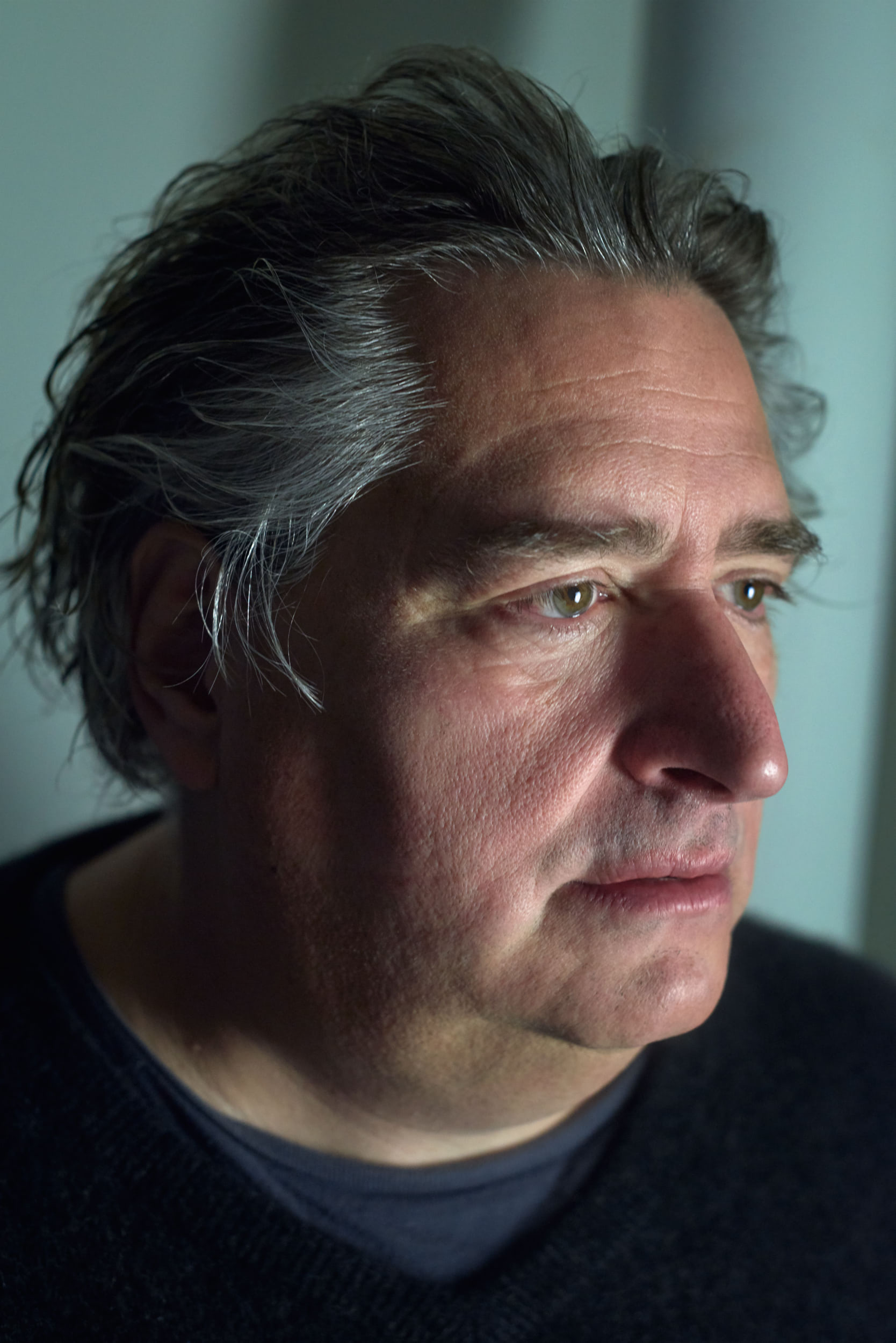
GREGORY CREWDSON, photography by Harper Glantz

Before one of your photographs takes shape, what happens in your mind? Is it an image, a story, a place, a light that is born, or is it initially something more elusive, a sensation still difficult to define?

My pictures always begin with location scouting. In that part of the process, it’s just me, driving around, getting out and taking snapshots, visiting over and over at different times of day to see how the light changes. It’s a long process, but at some point the picture either reveals itself to me or not. There definitely is some element that is hard to articulate, because it is more of a feeling, or a sense of a formal visual interest in a space.

lyf artificial poetry seek around the storefront window 2021 2022 gregory crewdson.jpg
GREGORY CREWDSON, The Storefront Window (2021-2022). Digital pigment printing © Gregory Crewdson

In your photographs, there's often something left unsaid: an event we don't see, a relationship we don't understand, a situation whose origins we don't know. What do you hope will happen to the viewer when faced with what the image doesn't reveal?

I’m interested in just one moment, and that’s conveyed in the photograph. So the viewer is left with a very open-ended story. There is no before or after. There is almost nothing happening in a literal way. I leave it open-ended purposefully, because even I don’t know exactly what might have happened just before or after. The viewer has to resolve that when looking at the picture. What I want is for the formal nature of the picture, the light and color, to express something, and hopefully to evoke a feeling, a mood, an uncanny view of everyday life.

lyf artificial poetry seek around a1 auto sales 2021 2022 gregory crewdson.jpg
GREGORY CREWDSON, A1 Auto Sales (2021-2022). Digital pigment printing © Gregory Crewdson
lyf artificial poetry seek around the lounge 2021 2022 gregory crewdson.jpg
GREGORY CREWDSON, The Lounge (2021-2022). Digital pigment printing © Gregory Crewdson

Your characters often seem disconnected from the world around them, even when they're in familiar, everyday settings, as if immersed in an inner dimension we don't have access to. What interests you about this dimension that remains invisible to the viewer? And what does it allow you to tell?

Unlike other narrative forms, which would deal with linear storyline, dialogue, before and after, narrative arc and so forth, a photograph is very limited in how much story it can actually tell. Photography does not do well at a literal emotion, it’s more suggestive to have almost nothing happening. The story, I hope, becomes more about something interior occurring with the figure in relation to their surroundings. A sense of contemplation, apprehension, a search for some kind of larger meaning.

lyf artificial poetry seek around alone street 2018 2019 gregory crewdson.jpg
GREGORY CREWDSON, Alone Street (2018 – 2019). Digital pigment printing © Gregory Crewdson
lyf artificial poetry seek around pickup truck 2014 gregory crewdson.jpg
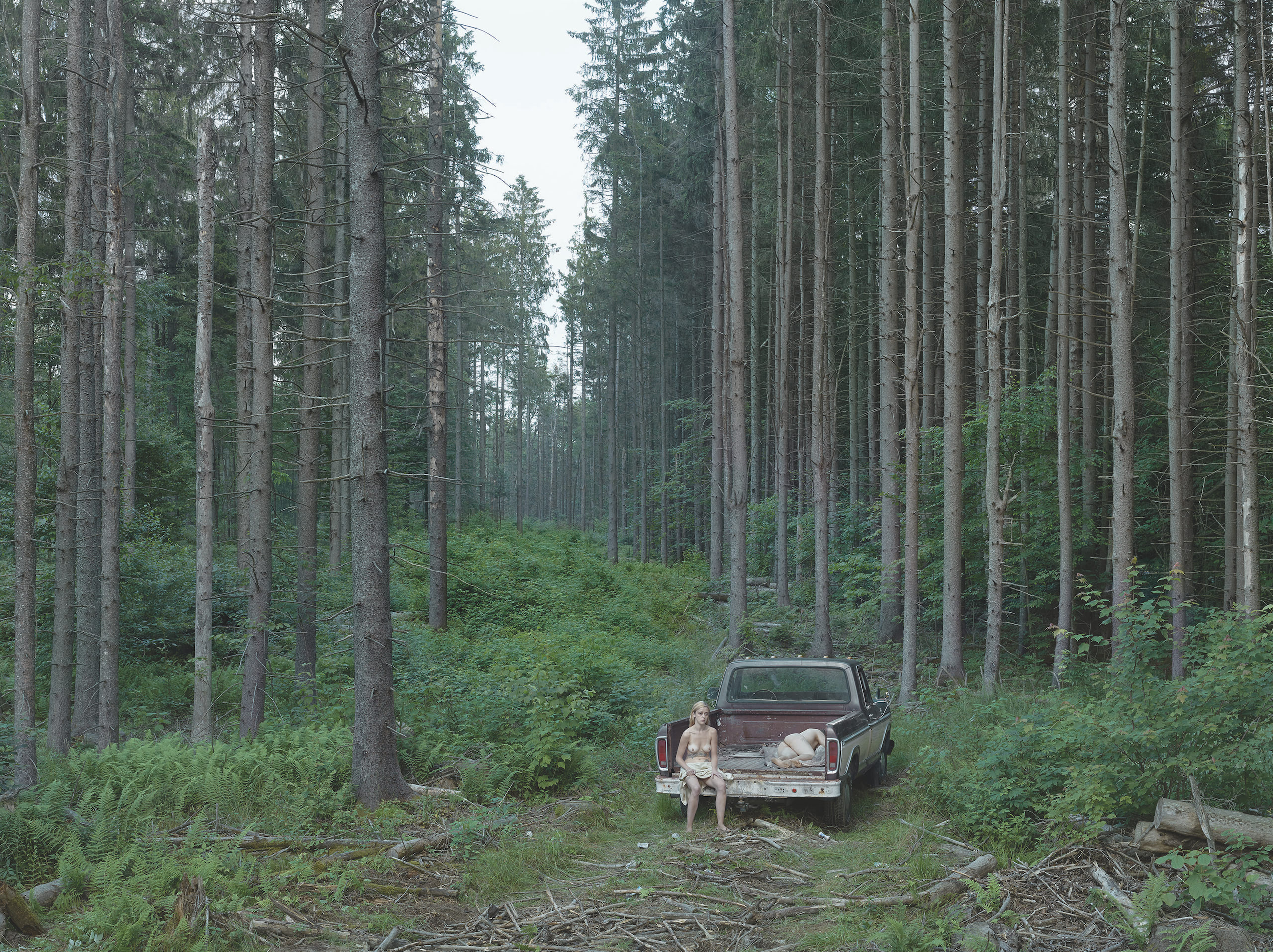
GREGORY CREWDSON, Pickup Truck (2014). Digital pigment printing © Gregory Crewdson
lyf artificial poetry seek around the shed 2013 gregory crewdson.jpg
GREGORY CREWDSON, The Shed (2013). Digital pigment printing © Gregory Crewdson

The Chiostri di San Pietro in Reggio Emilia are hosting, until January 17, 2027, the exhibition “Gregory Crewdson. Eveningside”, an extensive solo exhibition dedicated to the work of the renowned American photographer.

Curated by Jean-Charles Vergne, the exhibition brings together, within a single narrative journey, the photographic trilogy that the artist developed over the course of an entire decade. A visual journey that encompasses the series Cathedral of the Pines, An Eclipse of Moths, and the most recent Eveningside.

Special thanks to Studio Esseci for their kind collaboration and for providing the materials.

Read more on the hard copy

lyf artificial poetry seek around title oona ode.svg
lyf artificial poetry seek around oona ode.jpg
Oona Ode

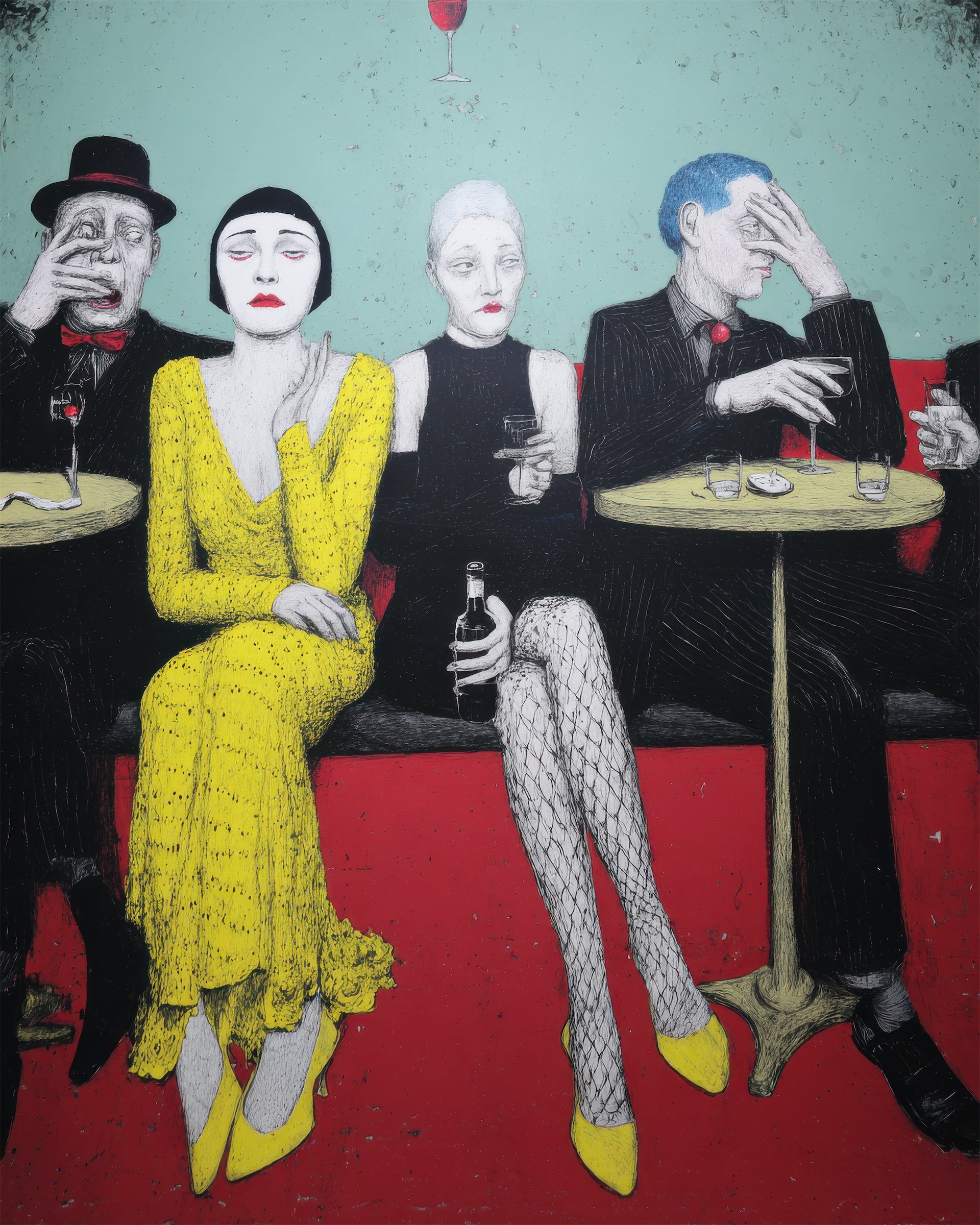
Looking at your work, one often gets the feeling that the image comes before the words: something emerges, insists, returns, even before it can be explained. Where does an image begin for you? From a shape, a sensation, a memory, or else from something you can't name?

This question makes me think about the late David Lynch. He described ideas as being like fish, they swim by, and you have to be able to catch them and then translate them into being. And then my brain immediately jumps to Lucas in Empire Records: “Who knows where thoughts come from? They just appear”. Which is probably a pretty good example of how my brain works. Weird, strange, curious connections between things that, from the outside, might seem completely unrelated, but to me make all the sense in the world.

Where does my art begin? It begins in a dense abyss. A compact sludge of emotions, thoughts and ideas. What I pull out isn't really an image. It’s more often a feeling that there is something I need to understand. I’m not particularly good at processing through words, so art has become a translator for my thoughts. I’m not working toward an image; I’m working toward understanding. The images are more like paragraphs. I use them to explain something to myself, something I’ve read, heard, experienced, remembered or felt. I sometimes describe the work as visual essays.

I was disconnected from myself for a very long time. I used to describe myself as being a neighbour to my emotions, somewhere I could visit, but rarely chose to.

Art changed that.

Now I understand my mind through images.

lyf artificial poetry seek around a think.jpg
Oona Ode, A Think

There are works that are looked at and forgotten, and others that continue to work within us even after we abandon them. Yours, at least for me, belong to the second category: they don’t just stand there to be seen, they leave a mark. When you create, do you ever think about what might remain in the viewers after the image has disappeared from their field of vision?

Haha, I try not to think too much about the viewer. It was really hard for me to post my work in the beginning. I’d post something and take it down constantly. I’ve even taken my entire Instagram down several times, though my best friend has informed me I’m no longer allowed to do that.

But I do think some of my images sit within people. Because so much of my art is about trying to understand something myself, I think sometimes other people end up understanding alongside me. Often my images say the hard thing quite plainly, and people recognize something of themselves in that: you’ve felt this too. You know what this is.

I also think colour plays a huge role. It can almost disarm people. Your first instinct might be, ooh, pretty, or bright, or simply interesting. It invites you in before you necessarily know what you're looking at. Then the image has time to sink in, and something else begins to emerge.

lyf artificial poetry seek around alley cat.jpg
Oona Ode, Alley Cat
lyf artificial poetry seek around evening out 2.jpg
Oona Ode, Evening Out 2

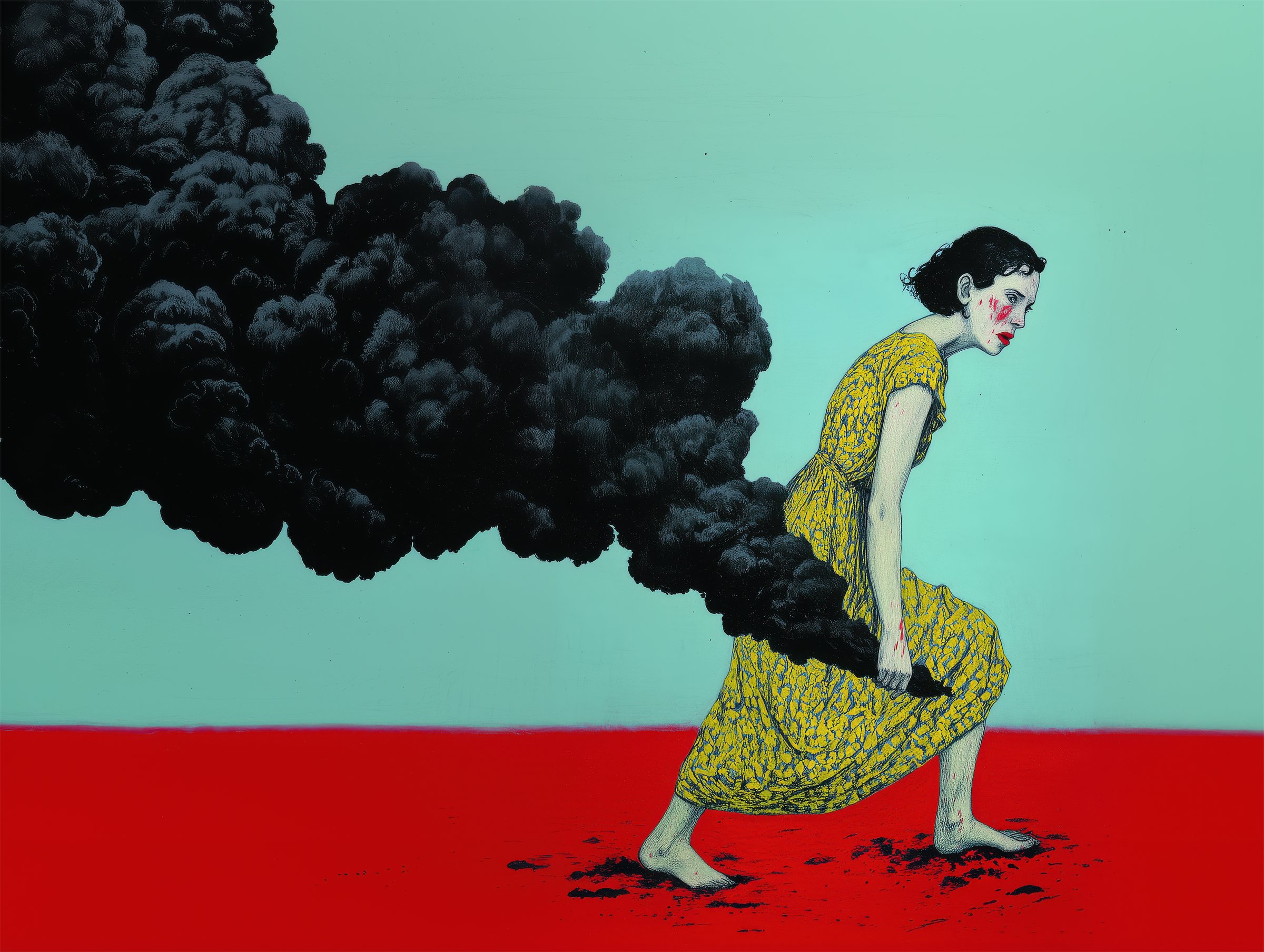
The images you create can evoke loneliness, anxiety, desire and, in my opinion, even a form of courage, without ever openly declaring them. Where does this strength come from? Is it something constructed through shapes, colors, and atmospheres, or is it precisely what remains invisible – what the work doesn't say – that makes it so emotionally powerful?

I think it’s actually my bluntness that instils that feeling of courage. I say plainly what other people may shy away from. In those moments, I think what you’re seeing are my moments of understanding: this is what I feel. This is what I think about you. This is what I think happened. This is what I think.

But you also see me struggling to get there. The loneliness, anxiety, desire, courage, confusion, love, anger – those are glimpses of me arriving at my own opinion. Once I arrive there, I don't really see a reason to be afraid of it.

At the same time, I purposefully don't overly explain in words what the work is about. Everyone brings a lifetime of experiences to an image that I couldn't possibly know about. Who am I to tell someone their understanding of an image is wrong? Their interpretation doesn't take anything away from mine. We can arrive at the same image carrying completely different lives, recognize something in it, and understand one another for a moment.

lyf artificial poetry seek around gauche.jpg
Oona Ode, Gauche
lyf artificial poetry seek around grief.jpg
Oona Ode, Grief
lyf artificial poetry seek around man following woman 3.jpg
Oona Ode, Man Following Woman 3
lyf artificial poetry seek around witness.jpg
Oona Ode, Witness

Oona Ode / @oonaode / oonaode.com

Read more on the hard copy

lyf artificial poetry seek around title daniel b dias.svg
lyf artificial poetry seek around daniel b dias portrait 2024.jpg
Daniel BA Dias “Portrait”, 2024

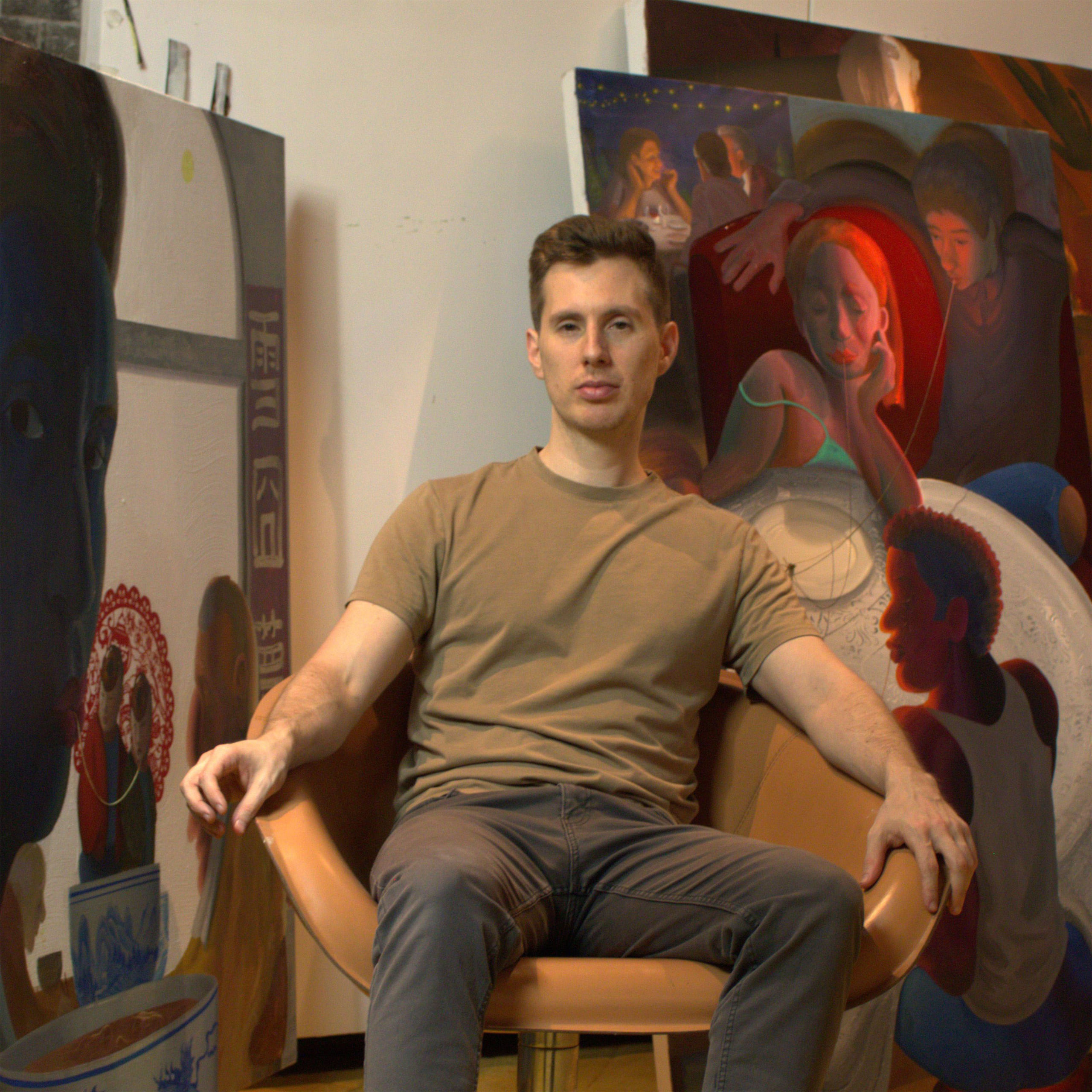
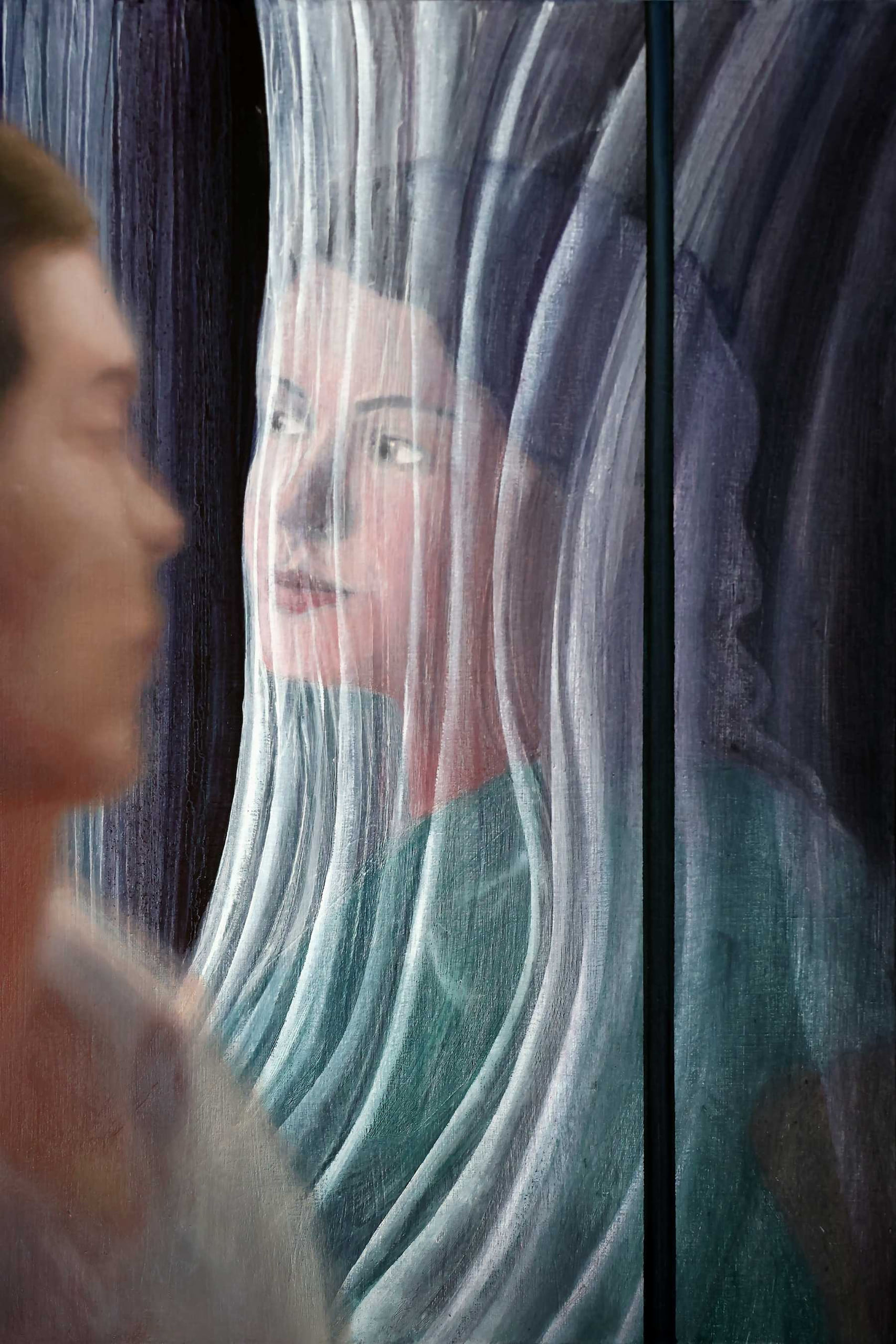
Daniel, I looked at your works for a long time before preparing this interview. My first impression, which has remained constant over time, was one of profound ambiguity, a mystery that seems to belong more to the psychological and perceptive dimension than to the purely narrative one. I'd like to start right from here: is this sense of mystery in your paintings something you consciously construct, or does it arise from the way the viewer interacts with the images?

It’s definitely a bit of both. I consciously construct a degree of ambiguity, particularly through how I stage figures. I deliberately set up interactions where the underlying intentions remain undefined. Throughout the painting process (which involves continuous editing and repainting) I look for ways for figures to relate without handing over a fixed narrative or emotional reading. I work mostly from imagination rather than direct reference, and I aim to conjure figures that seemingly possess an internal dialogue they aren't willing to fully divulge. That same vagueness extends to the environment. The spaces I paint might evoke familiar architecture or furnishings, but they are juxtaposed in ways that resist literal geographic or temporal placement.

When viewers encounter the work, they naturally seek to resolve that mystery. They often project specific plots onto the scenes; like deciding who is betraying whom, or what secret is being kept. While it's human nature to fill in narrative gaps, I never paint a specific ‘event’. I am much more interested in painting an underlying dynamic, like the unspoken tensions, power struggles, and psychological entanglements that recur throughout human experience. Keeping the work open allows the viewer to project their own lived reality into that space.

lyf artificial poetry seek around knot chinese ink and canvas thread on.jpg
Daniel B. Dias “Knot” - Oil, acrylic, Chinese ink and canvas thread on canvas

In your works, I often feel like I'm standing before a suspended moment: something has just happened or is about to happen. The characters are motionless, the settings are silent, the actions are interrupted. Where does this suspension come from, and what does it mean for you?

For me, painting has always possessed a unique capacity for the suspended moment, where viewers get to observe from a safe distance or to step directly into the moment. I aim to construct a scene at or just before its peak tension, where every compositional element feels deliberately aligned. It functions somewhat like a traditional tableau, but with a more casual, unsettling immediacy.

At times, it should feel as though the figures have just registered the viewer's presence. Perhaps they are holding their breath or freezing in place mid-gesture, as if interrupted. I take a lot of inspiration from Édouard Manet in how figures directly confront the viewer while simultaneously looking past one another. That gaze creates both an invitation and a confrontation, asking the viewer to assess the underlying tension of the room and consider where they fit within the dynamic.

lyf artificial poetry seek around untitled wartime oil and acrylic on wooden.jpg
Daniel B. Dias “Untitled (Wartime)”- Oil and acrylic on wooden panel
lyf artificial poetry seek around daniel b dias to satiate an illusion.jpg
Daniel B. Dias “To Satiate An Illusion” - Oil and canvas thread on canvas - 2025

Your characters are often close together in space, but sometimes they seem to inhabit separate interior worlds, as if there were a silent or suspended communication between them. What kind of relationship do you imagine between the figures you depict, and how much does the space surrounding them contribute to defining their bonds, distances, and tensions?

While I’m painting, I do envision specific dynamics between the figures, but I deliberately keep them nebulous to leave room for interpretation. Importantly, these relationships aren't always strictly interpersonal. Often, the interaction between two figures feels allegorical to me, perhaps mirroring shifts in global politics, or reflecting the friction between people, abstract ideas, and material objects.

The spatial arrangement plays a crucial role in framing those dynamics. As I intentionally construct a sense of physical or implied distance between the figures that limits true, direct connection.

lyf artificial poetry seek around daniel b dias the right place at.jpg
Daniel B. Dias “The Right Place At The Wrong Side” - Oil on canvas - 2023
lyf artificial poetry seek around daniel b dias fine dining blue 2023.jpg
Daniel B. Dias “Fine Dining (Blue)” - Oil on canvas - 2023
lyf artificial poetry seek around daniel b dias a peace turned violent.jpg
Daniel B. Dias “A Peace Turned Violent” - Oil and acrylic on canvas - 2023
lyf artificial poetry seek around daniel b dias the thinnest margin 2025.jpg
Daniel B. Dias “The Thinnest Margin” - Oil and acrylic on canvas - 2025

Courtesy of Dorothy Circus Gallery and the Artist

Read more on the hard copy

DO You like what you see?

DISCOVER MORE ON the hard copy

LYF logo bianco complete 1
Subscribe to our newsletter

Sign up for our newsletter with the best inspirations.